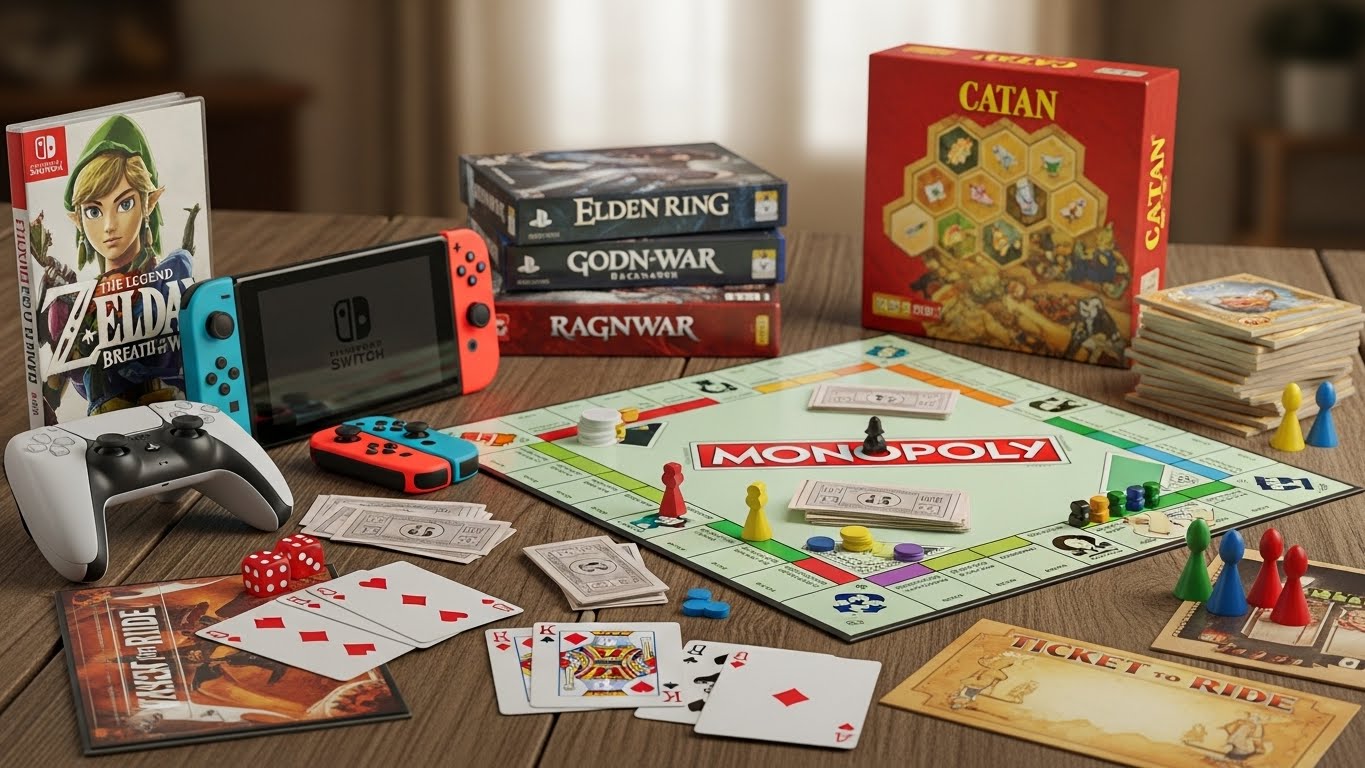

In the world of gaming, it is all too easy to fall into familiar patterns. Whether it’s another open-world action-adventure game or a first-person shooter with updated graphics, many games today follow established formulas that players are comfortable with. But what happens when a developer dares to take a leap of faith and introduce something truly innovative? In this blog post, we explore some of the most unique video games that have pushed boundaries and offered something new to the gaming community.
The Need for Innovation in Gaming
Gaming, like any other form of entertainment, is constantly evolving. While sequels and franchises are often safe bets for publishers, they can also stifle creativity. In contrast, unique games bring fresh experiences that challenge players’ expectations, explore new genres, and often leave a lasting impact on the industry.
Innovation is not always about advanced graphics or cutting-edge technology. It can come in the form of gameplay mechanics, narrative structures, art direction, or even the type of interaction players have with the game world. Some of the most memorable games are those that took risks, introduced new ideas, and captured the imagination of gamers.
The Role of Narrative in Unique Games
One area where innovation has been especially prominent is in narrative design. While traditional games often use a straightforward hero’s journey structure, some titles have experimented with unconventional storytelling techniques that have reshaped the way we think about narrative in gaming.
The Stanley Parable
One of the most iconic examples of a game with an unconventional narrative is The Stanley Parable. This interactive story is a mind-bending experience where players take control of Stanley, an office worker who finds himself alone in his workplace after the disappearance of his colleagues. However, the true twist lies in the game’s unique narrative structure. The story unfolds in a nonlinear fashion, with the player given choices that influence the outcome. The beauty of The Stanley Parable is that it often breaks the fourth wall, commenting on the nature of choice in video games and player agency.
The game doesn’t simply let you choose an outcome; it forces you to question the very nature of choice in gaming. Can you truly make a free choice, or are you always being guided by an invisible hand? The Stanley Parable challenges the expectations of what a game’s narrative can be, making it a standout title in terms of innovation.
What Remains of Edith Finch
Another standout example is What Remains of Edith Finch. This game tells the tragic story of the Finch family through the eyes of Edith, the last surviving member of her family. What makes What Remains of Edith Finch unique is how it presents its narrative. Instead of relying on traditional dialogue or cutscenes, the game uses interactive storytelling, where each family member’s story is told through a distinct, playable vignette. These stories are often surreal, poignant, and tragic, but the game’s clever use of varied mechanics keeps the experience fresh and engaging throughout.
By blending different gameplay styles to tell each individual family member’s story, What Remains of Edith Finch offers an emotionally resonant experience that feels like an artistic exploration rather than just a game. The game’s narrative design is a brilliant example of how a unique approach to storytelling can elevate a game to something extraordinary.
Gameplay Mechanics: Revolutionizing How We Play
While narrative is important, a truly unique game often offers fresh and innovative gameplay mechanics that redefine how we engage with a title. These games introduce new ways of thinking about interaction, mechanics, and player goals.
Portal
One of the most iconic examples of a game that revolutionized gameplay is Portal. In Portal, players solve puzzles using a device that creates portals on flat surfaces, allowing them to teleport between different areas of a level. This simple mechanic was used to create complex puzzles that required not only logical thinking but also spatial awareness.
What made Portal so unique wasn’t just the mechanics themselves, but how they were woven into the narrative and world-building. The game was set in the Aperture Science facility, where the player is guided (and occasionally misled) by the ominous AI known as GLaDOS. This blend of clever mechanics, dark humor, and an engaging story made Portal a groundbreaking experience that influenced many puzzle games that followed.
The game also introduced players to a new type of puzzle-solving, where manipulating space and time was as important as conventional problem-solving. The success of Portal wasn’t just in its mechanics, but in how it merged these mechanics with a gripping story, making the player feel like they were an active participant in a larger narrative.
Katamari Damacy
On the opposite end of the spectrum from puzzle-solving, Katamari Damacy is a game that is as whimsical and outlandish as it is unique. In Katamari Damacy, players control the Prince of All Cosmos, who is tasked with rolling up objects to create new stars. The catch? The more you roll, the bigger your ball gets, which allows you to collect even larger objects, creating a chain reaction of absurdity and humor.
The gameplay mechanic is simple but addictive: players guide a sticky ball (the katamari) around various environments, collecting everything from paper clips to entire buildings. The quirky, colorful art style and soundtrack add to the charm, making it an unforgettable experience. Katamari Damacy is a game that doesn’t take itself seriously, yet its addictive, straightforward gameplay has a universal appeal. It’s a shining example of how a unique concept can transcend traditional gaming genres.
Art and Aesthetics: A Visual Journey Like No Other
The aesthetic design of a game plays a significant role in its uniqueness. Some games stand out because of their stunning art direction, while others captivate with minimalist or abstract designs that break away from the typical “realistic” approach.
Journey
Journey is often regarded as one of the most visually stunning and emotionally impactful games ever made. The game takes players through a vast desert, where they control a robed figure journeying toward a distant mountain. The gameplay is minimalistic, with the only actions being walking and interacting with other players (who appear as anonymous robed figures as well).
The beauty of Journey lies not just in its visuals but in the way it conveys emotion without using traditional dialogue. The music and art work in perfect harmony to create a serene, almost spiritual atmosphere. The player’s connection with the game world is built through exploration and subtle interactions, making it one of the most moving experiences in gaming history.
Gris
Another game that uses its art style to convey deep emotional themes is Gris. This platformer tells the story of Gris, a young woman going through a period of grief. The game’s art direction is breathtaking, with each level representing a different stage in Gris’s emotional journey. The visuals are hand-drawn and painted, with each environment transitioning through different colors as Gris overcomes her sadness.
The beauty of Gris isn’t just in the art but in how the game uses color to symbolize emotional growth. Each color change represents a stage in Gris’s journey toward healing, creating a powerful narrative that’s told entirely through visual cues. Gris stands as an example of how unique art direction can elevate a game’s emotional resonance.
The Future of Unique Games
As the gaming industry continues to evolve, it’s exciting to imagine what the future holds for unique, boundary-pushing titles. With new technologies such as virtual reality (VR), augmented reality (AR), and artificial intelligence (AI) becoming more accessible, developers are now able to experiment with even more immersive and innovative gameplay experiences.
We may soon see games that not only challenge our understanding of narrative, mechanics, and aesthetics but also redefine the very way we interact with virtual worlds. The rise of indie game development has already opened the door for fresh and diverse voices, and it’s these independent creators who will continue to lead the charge toward a more innovative future in gaming.
Conclusion
Unique video games represent the best of what the gaming industry has to offer: creativity, risk-taking, and innovation. These games don’t just entertain; they challenge players to think differently about how games can be designed, experienced, and remembered. From narrative experimentation to new gameplay mechanics and stunning visuals, the possibilities are endless when it comes to creating something truly unique.
As gamers, we are fortunate to live in an era where game developers are constantly pushing the boundaries of what’s possible. The world of unique video games is filled with hidden gems that offer experiences unlike anything else—and in this ever-evolving medium, that’s something truly worth celebrating.