
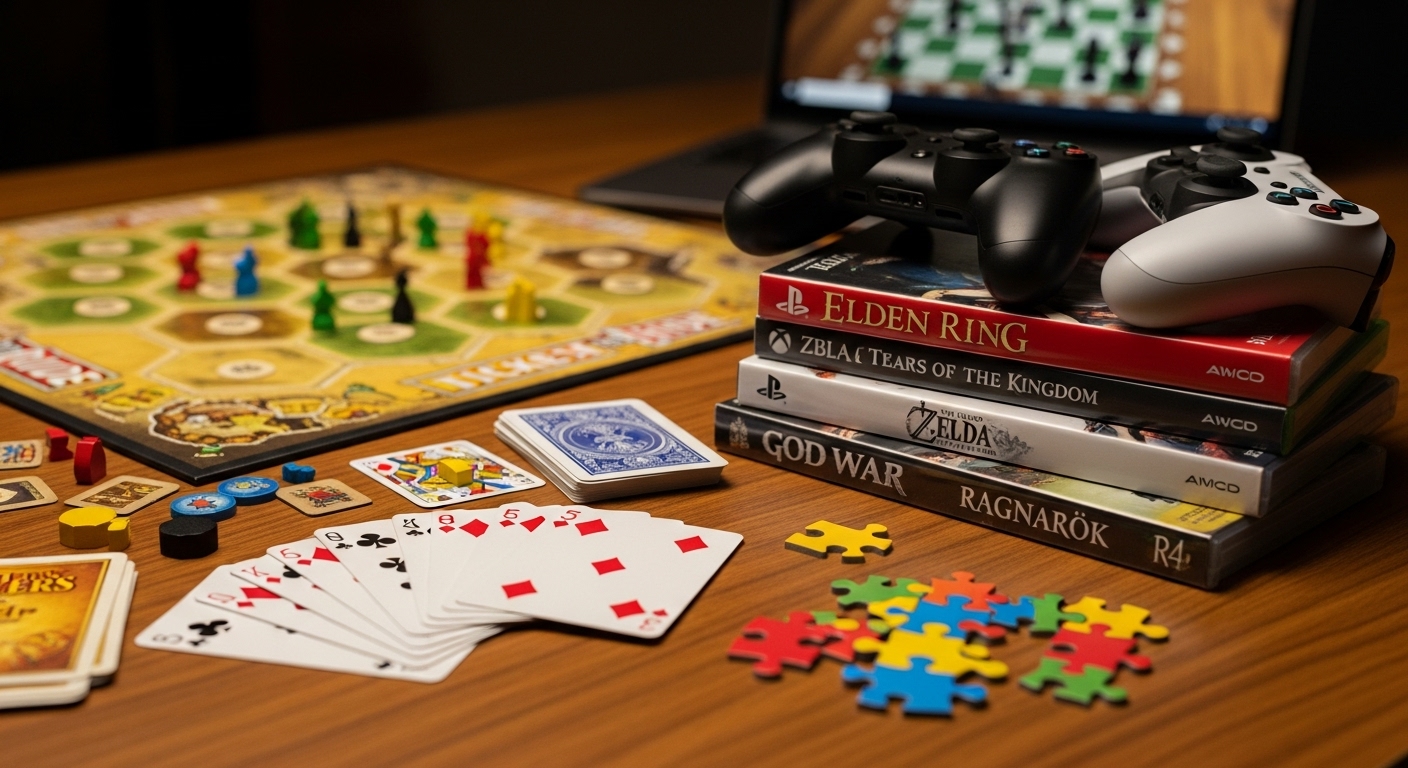
Introduction: The Expanding World of Play
Games have become one of the most influential and immersive forms of entertainment in human history. What once began as a simple pastime has transformed into a massive global industry that shapes culture, technology, and even human interaction. From the strategic depth of chess to the vibrant energy of digital gaming, the concept of play continues to evolve with every passing generation. Today, games are more than mere entertainment; they are experiences that educate, inspire, and connect people across the globe. The world of games is a dynamic universe, constantly changing and expanding, offering endless possibilities for both players and creators.
The Origins of Gaming: From Ancient Boards to Modern Screens
Gaming has existed for thousands of years, long before computers or smartphones were even imagined. Ancient civilizations created games not only for leisure but also as a means of teaching, bonding, and ritual. The Egyptians played Senet, a game that represented the journey of the soul through the afterlife, while the Chinese developed Go, a deeply strategic game that emphasized balance and intellect. These ancient creations were the first steps toward structured play, laying the groundwork for the diversity of games we enjoy today.
The Birth of Modern Gaming: Creativity Meets Technology
As societies advanced, so did their games. The 19th and early 20th centuries brought the rise of board and card games that encouraged social interaction and strategic thinking. Monopoly taught economic management, Scrabble expanded vocabulary, and Chess continued to represent intellectual mastery. However, the true revolution arrived in the mid-20th century with the birth of electronic gaming. What began with simple machines like the cathode-ray tube amusement device eventually led to arcade classics such as Pong and Space Invaders. These early experiments introduced players to the concept of interactivity and paved the way for digital gaming’s explosive future.
The Golden Age of Video Games: From Pixels to Icons
The late 1970s and 1980s are often remembered as the golden age of gaming. Arcade machines filled entertainment halls, and home consoles began appearing in living rooms worldwide. Titles like Pac-Man, Donkey Kong, and Super Mario Bros. became household names, representing a new era of joy and innovation. These games, though simple by today’s standards, captivated audiences with their challenge, creativity, and colorful design. The introduction of 8-bit and 16-bit consoles expanded the creative boundaries of developers, allowing them to build worlds that players could explore for hours. This era gave rise to iconic franchises that still influence modern gaming culture.
The Rise of Home Consoles and Personal Computers
As technology improved, gaming moved from the arcades into homes. Consoles like the Nintendo Entertainment System and the Sega Genesis became central to family entertainment. Meanwhile, personal computers opened new possibilities for more complex and strategic games. Titles such as SimCity, Civilization, and The Sims introduced players to creativity and resource management, while shooters like Doom redefined fast-paced gameplay. This period also marked the beginning of modding communities, where players started to experiment with game design, contributing to the growing culture of user-generated content.
The Emergence of Online Gaming: A Connected Revolution
The advent of the internet brought one of the biggest transformations in gaming history. Online play allowed people to connect and compete across continents, creating virtual worlds that never slept. Multiplayer games like Counter-Strike, StarCraft, and World of Warcraft became cultural phenomena, giving rise to online communities and digital friendships. This shift turned gaming from an isolated experience into a global social network. Players could now collaborate, communicate, and compete in real-time, breaking geographical boundaries and fostering a shared sense of identity among gamers worldwide.
The Explosion of Mobile Gaming: Play Anytime, Anywhere
The arrival of smartphones made gaming more accessible than ever before. Mobile gaming brought entertainment into everyone’s hands, regardless of age or skill level. Titles like Angry Birds, Temple Run, and Clash of Clans became instant hits, proving that simplicity and accessibility could reach massive audiences. Unlike traditional gaming, mobile games required no expensive hardware and could be played anywhere—on the bus, at home, or during a break at work. This revolution expanded the definition of a “gamer,” making play a universal experience rather than a niche hobby.
The Art of Game Design: Blending Story and Experience
Creating a great game is both an art and a science. Game design involves storytelling, visual art, music, and technology coming together to create a unified experience. Every detail—from character design to sound effects—contributes to immersion. Story-driven games like The Last of Us and Red Dead Redemption have shown that gaming can deliver emotional depth equal to that of films and literature. Meanwhile, open-world games let players write their own stories through exploration and choice. Game design today focuses on creativity, diversity, and player freedom, allowing people to engage with virtual worlds in deeply personal ways.
The Educational Power of Games
Games are not only entertaining—they are powerful tools for learning. Educational games teach children math, science, and language in engaging ways that traditional methods often cannot. Strategy and puzzle games enhance cognitive skills such as problem-solving and critical thinking. Simulation games like city-builders and flight simulators offer practical lessons in management and real-world systems. Even multiplayer games develop teamwork, leadership, and communication. This growing intersection between education and gaming demonstrates that play can be both enjoyable and intellectually enriching.
The Rise of Esports: Competition in the Digital Arena
Esports has turned gaming into a professional global sport. What began as friendly competition among friends has evolved into massive tournaments watched by millions. Games like League of Legends, Dota 2, and Fortnite have created professional athletes who earn fame and fortune through skill and strategy. Esports combines entertainment, teamwork, and dedication, demanding mental agility and split-second decision-making. The industry now has sponsorships, commentators, and loyal fan bases similar to traditional sports. It represents a new kind of digital competition where talent and technology meet.
The Social and Cultural Impact of Games
Games today are cultural landmarks that influence art, fashion, and even social behavior. They inspire movies, music, and books, shaping modern storytelling across media. Gaming communities are also spaces where people express creativity, share experiences, and form meaningful friendships. Online multiplayer platforms allow people from different backgrounds to collaborate and communicate, promoting diversity and understanding. Moreover, games often serve as reflections of society, exploring themes like morality, identity, and environmental awareness. Through interactive storytelling, games can inspire empathy and awareness in ways that passive media cannot.
Challenges in the Gaming World
Despite its growth and success, the gaming industry faces challenges. Issues such as addiction, cyberbullying, and unethical monetization practices have drawn criticism. Developers must balance engagement with responsibility, ensuring that games remain healthy forms of entertainment. Another concern is the representation of gender, race, and identity in gaming narratives. The industry is gradually becoming more inclusive, with more diverse characters and stories. Addressing these challenges requires cooperation between developers, players, and communities to build a safer and more positive gaming environment.
Technological Innovation and the Future of Games
The future of gaming is shaped by rapid technological advancement. Virtual Reality (VR) and Augmented Reality (AR) are transforming how players interact with digital worlds. VR offers fully immersive experiences where players can feel physically present in a game environment, while AR blends virtual elements with the real world. Artificial intelligence is also playing a crucial role in creating smarter non-player characters and adaptive gameplay. Cloud gaming is making high-quality titles accessible without the need for powerful hardware, and the concept of the metaverse is blurring the lines between gaming, social media, and real life. The future promises deeper immersion, creativity, and interconnectivity than ever before.
Games and Mental Well-Being
Contrary to misconceptions, gaming can positively impact mental health when enjoyed responsibly. Many players find comfort and relaxation through gaming, using it as a way to escape stress and express creativity. Cooperative and social games help build friendships and combat loneliness. Games that focus on narrative and exploration can provide emotional healing and a sense of accomplishment. However, moderation is key, and maintaining a healthy balance ensures that gaming remains a source of joy rather than dependency.
Games as a Reflection of Humanity
At their core, games reflect the human desire to learn, compete, and connect. They are mirrors of our creativity, intellect, and imagination. Each generation of games tells us something about the society that created it. From simple puzzles that challenge our logic to vast virtual worlds that explore human emotion, games continue to evolve alongside us. They are not just pixels or cards—they are expressions of the human spirit, representing our constant drive to dream and play.
Conclusion: The Infinite Journey of Play
The journey of games is a story of imagination, innovation, and connection. From ancient boards carved in stone to high-definition virtual realities, gaming has become a universal language that transcends age, culture, and geography. It teaches us to think strategically, work together, and explore worlds beyond our own. The power of games lies not just in their ability to entertain but in their potential to shape the way we live, learn, and connect. As technology continues to evolve, one thing remains constant—the human need for play. The universe of games will keep expanding, inspiring generations to come, and proving that play is not just a pastime but a reflection of what makes us truly human.


