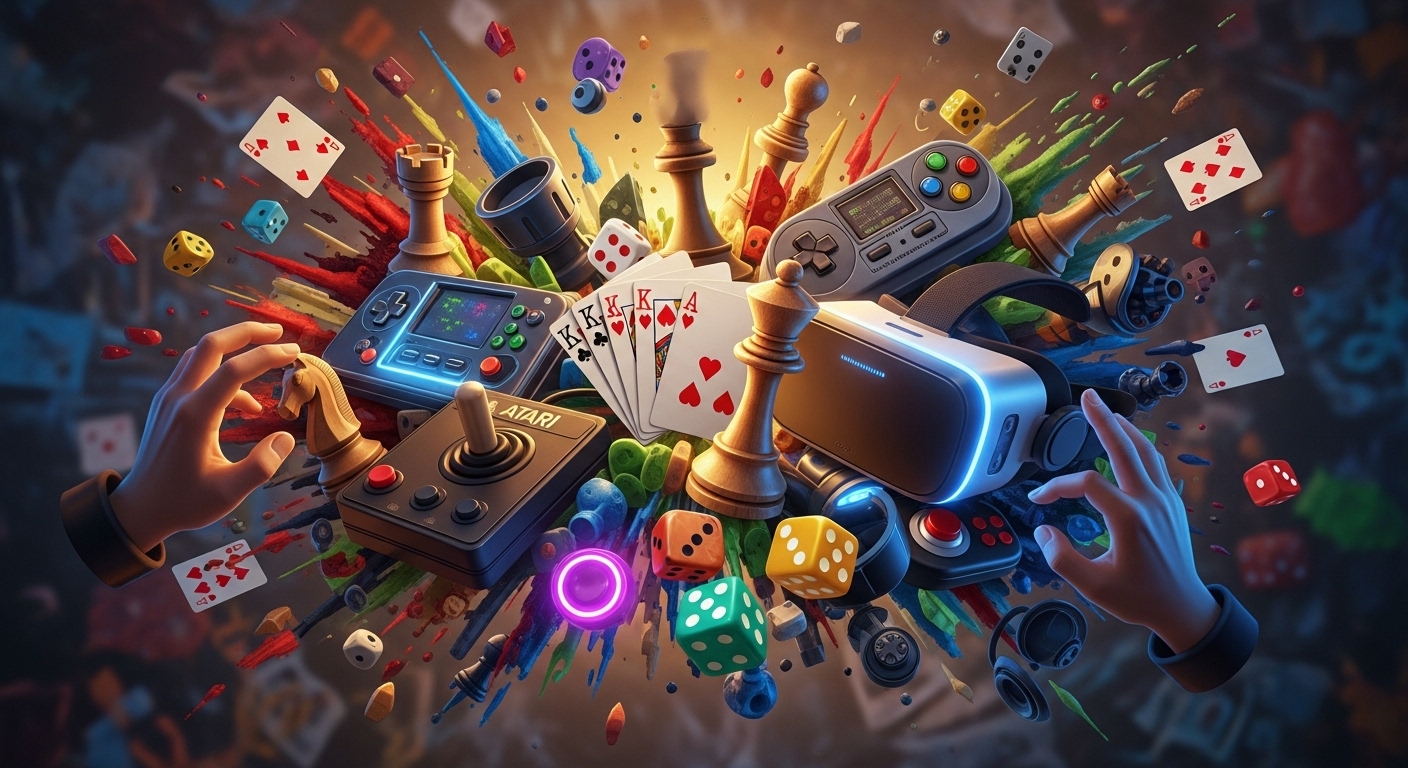

Video games have evolved far beyond simple entertainment. They have become a medium for storytelling, artistic expression, mental challenges, and social interaction. While mainstream games often follow familiar tropes—shooters, racing, and open-world adventures—there exists a fascinating subset of games that dare to experiment. These games defy conventional rules, surprise players with unique mechanics, or immerse them in worlds that feel unlike anything else. In this article, we explore games that stand out for their creativity, innovation, and ability to redefine what it means to play.
The Rise of Experimental Games
For decades, the video game industry focused on formulaic genres designed to appeal to the largest audience. However, the rise of independent game development has changed that. Indie developers, often working with limited budgets but unlimited creativity, have introduced games that challenge player expectations. These games are not just about winning or losing; they are about experiencing something new. Experimental games often blend art, storytelling, music, and gameplay in ways that mainstream titles rarely attempt.
Games That Bend Reality
Some games captivate players by bending the very rules of reality. Titles like these do not rely on hyper-realistic graphics or traditional narratives. Instead, they manipulate perception, physics, or time to create unique experiences. In these games, the world itself becomes a puzzle. Players might walk on walls, alter gravity, or interact with objects in ways that defy real-world logic. These mechanics challenge the mind and spark curiosity, offering a sense of wonder that few conventional games can replicate. The thrill comes from discovering new ways to interact with a digital universe that doesn’t obey everyday rules.
Storytelling That Breaks the Mold
Another way games stand out is through unconventional storytelling. Unlike traditional games where the plot follows a linear path, some titles offer narratives that are fragmented, abstract, or player-driven. These games often rely on environmental storytelling, where every object, sound, or visual clue contributes to the story. Players are encouraged to interpret meaning for themselves, creating a highly personal experience. The joy of these games is not in completing a mission but in uncovering layers of a story that might differ for each player. Such storytelling challenges the notion that games must have a straightforward plot to be engaging.
Games as Emotional Experiences
Some of the most memorable games are those that evoke strong emotions. They explore themes such as loss, love, regret, or identity in ways that feel intimate and human. These games often prioritize atmosphere, music, and character development over complex gameplay mechanics. By focusing on emotion, developers create experiences that linger in the player’s mind long after the game is over. These games remind us that video games are not just entertainment; they are a medium capable of conveying profound feelings and sparking empathy.
Puzzle Games That Defy Expectations
Puzzle games have existed for decades, yet some titles push the boundaries of what a puzzle game can be. These games introduce mechanics that are entirely new or combine familiar mechanics in unexpected ways. Players may find themselves solving puzzles by manipulating time, reshaping environments, or using abstract logic that defies traditional reasoning. The thrill comes not only from solving the puzzle but from understanding the unique rules that govern the game world. These games challenge conventional problem-solving skills and reward creativity as much as intelligence.
Games That Blur the Line Between Player and Creator
Certain games stand out by giving players creative freedom on an unprecedented scale. In these titles, players are not just participants; they become co-creators. They can build worlds, design levels, or even alter the fundamental mechanics of the game itself. This form of gameplay encourages imagination and experimentation. Players are motivated to explore, invent, and share their creations with others. The sense of ownership and agency in these games can be deeply satisfying, turning every session into a personal adventure shaped entirely by the player’s choices.
Surreal and Abstract Worlds
Some games captivate through their sheer strangeness. Surreal and abstract games transport players to worlds that are dreamlike, bizarre, or disorienting. In these environments, familiar rules of space, time, and logic may not apply. Colors, shapes, and sounds become key elements of gameplay, often communicating meaning without words. Playing these games can feel like stepping into an interactive painting or a musical composition. They challenge conventional expectations and invite players to experience a world unconstrained by reality.
Games Focused on Human Connection
While many games focus on competition or combat, some prioritize human connection. These games explore relationships, communication, and collaboration in innovative ways. Multiplayer experiences may emphasize empathy, negotiation, or cooperation over traditional victory conditions. Even single-player games can foster a sense of companionship, allowing players to form emotional bonds with virtual characters or entities. These games highlight the social potential of gaming, reminding us that human connection can be as rewarding as defeating enemies or completing missions.
Minimalism as a Design Philosophy
Not all unique games rely on complex graphics or intricate mechanics. Some achieve distinctiveness through minimalism. By stripping gameplay down to its essential elements, these games emphasize purity of design. Minimalist games often focus on rhythm, timing, or spatial awareness, creating an experience that is both meditative and challenging. The simplicity can make the game more accessible while also highlighting the elegance of its core concept. Minimalism forces players to engage deeply with mechanics they might otherwise overlook, demonstrating that less can indeed be more.
The Role of Sound and Music
Audio is a powerful tool in crafting unique gaming experiences. Some games use sound as a central mechanic, where music, rhythm, or ambient noise directly influences gameplay. Players may need to listen carefully to navigate environments, solve puzzles, or anticipate events. In other games, music dynamically responds to player actions, creating an interactive soundtrack that evolves in real time. By integrating sound and gameplay so tightly, these games create immersive experiences that are memorable for both their auditory and interactive qualities.
Games That Teach Through Play
An interesting subset of games stands out for their educational value, but not in a conventional sense. These games teach players skills such as spatial reasoning, language, history, or strategy, but they do so subtly through engaging mechanics. Learning is integrated seamlessly into gameplay rather than being presented as a separate lesson. Players absorb knowledge naturally while solving challenges, exploring worlds, or experimenting with systems. This approach demonstrates how games can be both entertaining and enriching, blending fun with learning in ways that feel effortless.
Redefining Victory and Success
Many unique games challenge traditional notions of winning. Success might not be measured by high scores or completing levels but by exploration, creativity, or personal achievement. Players are encouraged to define their own goals and pursue experiences that resonate with them individually. This approach shifts the focus from competition to personal fulfillment. By redefining victory, these games expand the possibilities of what it means to play and invite players to experience gaming as a deeply personal journey rather than a standardized contest.
Why Unique Games Matter
Unique games are important because they push the boundaries of what gaming can be. They inspire creativity, provoke thought, and foster emotional engagement in ways that traditional games may not. By challenging conventions, these games expand the medium and demonstrate that games can be art, storytelling, social tools, or emotional experiences. They encourage players to think differently, approach problems creatively, and appreciate the artistry behind interactive design. In essence, unique games remind us that gaming is not just about play—it is about possibility.
Conclusion: Embracing the Unconventional
As the gaming industry continues to grow, unique and unconventional games will play a crucial role in shaping its future. They remind us that video games are not bound by formulas or expectations. Whether through surreal worlds, innovative mechanics, emotional storytelling, or creative freedom, these games challenge us to see play in a new light. Exploring these titles can be a transformative experience, expanding our understanding of what games can achieve. By embracing the unconventional, both players and developers contribute to a richer, more diverse gaming landscape that celebrates imagination above all else.
Gaming beyond the ordinary is an invitation to explore, experiment, and experience the unexpected. The next time you pick up a controller or start a new game on your computer, consider stepping off the beaten path. Dive into worlds that surprise you, challenge you, and inspire you. The possibilities are limitless, and the adventure is entirely yours.