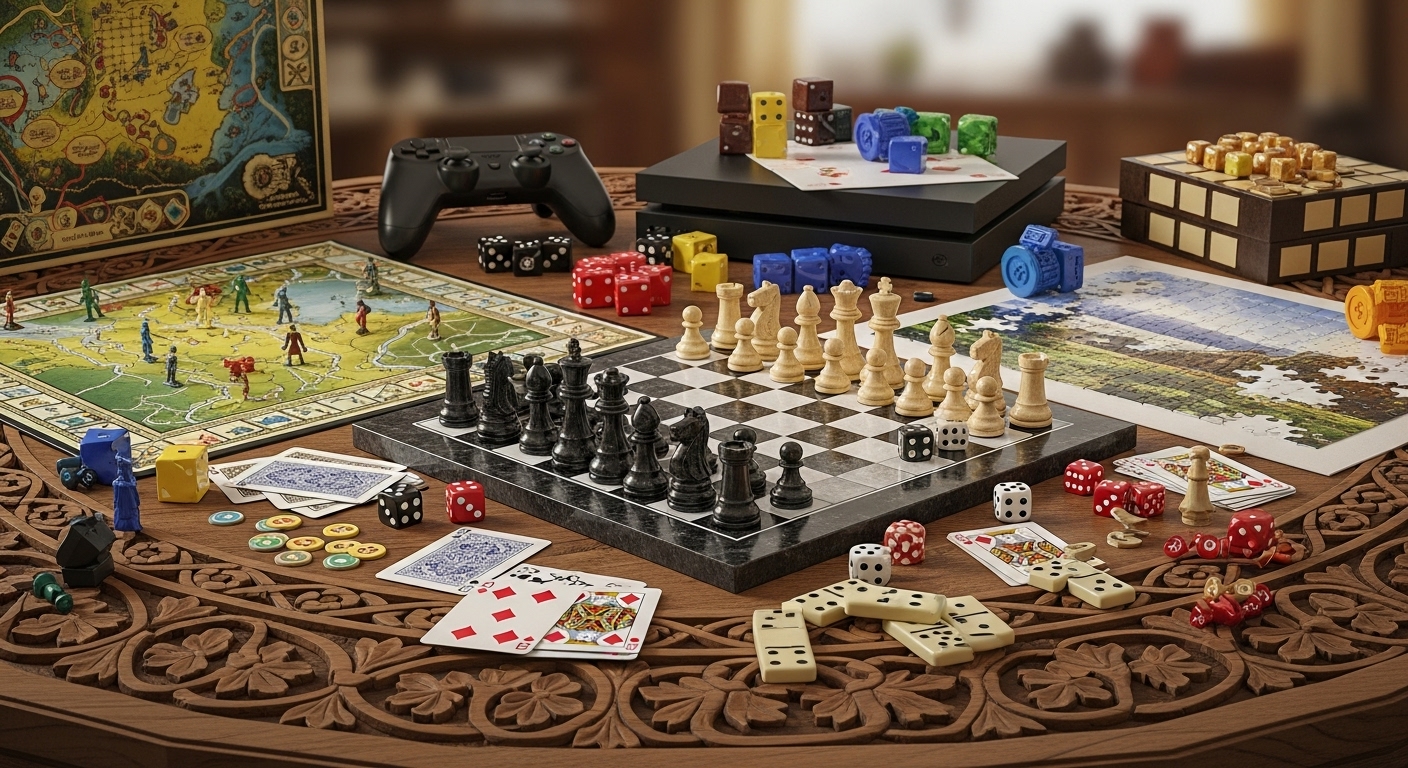

Games have been an essential part of human life for centuries. From ancient board games to modern video games, they entertain, challenge, and connect people across generations. Beyond simple amusement, games reflect creativity, strategy, and social interaction. They provide a safe space for learning, competition, and collaboration. In this blog, we explore the evolution of games, their cultural significance, psychological impact, and the future of gaming in an ever-changing digital world.
The Origins of Gaming
The history of games dates back thousands of years. Early civilizations developed games as a form of social activity, education, and recreation. Ancient Egyptians played Senet, a board game thought to teach strategy and patience. The Chinese created Go, a complex strategy game that emphasizes foresight and tactical thinking.
These early games were more than entertainment; they helped people learn problem-solving, develop strategic thinking, and engage socially. Gaming was a way to challenge the mind while building community, demonstrating that play has always had educational and social value.
The Rise of Board and Card Games
As societies developed, board and card games became increasingly popular. Chess, first played in India and later spreading to Europe, became the ultimate game of strategy and intellect. Card games like Poker and Bridge emerged, combining chance with skill and social interaction.
Board and card games played an important role in culture, often bringing families and communities together. They created shared experiences, taught rules and fair play, and offered entertainment that transcended age and social status. These traditional games laid the foundation for the strategic and social elements seen in modern gaming.
The Birth of Video Games
The late 20th century marked a revolution in gaming with the invention of video games. Early arcade games such as Pong and Space Invaders introduced digital play to a wide audience. Players were captivated by the challenge of high scores and interactive gameplay.
Video games were initially simple, with basic graphics and mechanics, but they created a new form of entertainment that blended technology, creativity, and competition. Arcades became social hubs, where players could compete, collaborate, and share strategies. This era marked the beginning of gaming as both a hobby and a cultural phenomenon.
The Home Console Era
The introduction of home consoles in the 1980s and 1990s transformed gaming. Systems like the Nintendo Entertainment System and Sega Genesis allowed people to play games in their own homes, creating a more personal and accessible experience.
Home consoles introduced narrative-driven games, where players could explore worlds, solve puzzles, and experience immersive stories. Titles like The Legend of Zelda and Metroid set new standards for creativity, interactivity, and engagement. Gaming became more than a pastime; it became an adventure.
Advancements in Graphics and Technology
As technology progressed, so did the complexity and realism of games. The transition from 2D to 3D graphics in the 1990s and 2000s allowed developers to create richer environments and more lifelike characters. Games like Final Fantasy VII, Half-Life, and The Sims showcased immersive storytelling, detailed worlds, and innovative gameplay.
Sound design, voice acting, and motion capture enhanced player immersion, making gaming a multi-sensory experience. These advancements demonstrated that games could tell stories, evoke emotions, and create experiences comparable to films or literature.
Multiplayer and Online Gaming
The rise of the internet revolutionized gaming by connecting players globally. Online multiplayer games allowed people to compete and collaborate across continents. Games like World of Warcraft, Counter-Strike, and League of Legends created large communities where players could socialize, strategize, and form teams.
Multiplayer gaming introduced new dynamics, including teamwork, communication, and social bonding. Competitive gaming led to the rise of professional eSports, where players could earn livelihoods and achieve worldwide recognition. Gaming became a social experience, with shared challenges and collective victories.
Mobile Gaming and Accessibility
The proliferation of smartphones made gaming accessible to a wider audience than ever before. Mobile games like Candy Crush, Clash of Clans, and PUBG Mobile allow people to play anywhere, anytime, bringing gaming into daily life.
Mobile gaming also demonstrates the adaptability of games. Developers create engaging experiences despite limited controls and smaller screens, proving that innovative gameplay is not restricted to high-end consoles. This accessibility has broadened gaming demographics, attracting players of all ages and backgrounds.
The Psychological Appeal of Games
Games appeal to human psychology in profound ways. They provide a sense of achievement, challenge, and reward. Leveling systems, points, and unlockable content motivate players and create satisfaction.
Games also stimulate cognitive development. Strategic thinking, problem-solving, and decision-making are essential to gameplay. Multiplayer games encourage teamwork, communication, and social interaction, helping players develop real-world skills. Gaming satisfies the human desire for challenge, creativity, and connection.
Storytelling in Games
Storytelling has become a central element in modern games. Immersive narratives, complex characters, and dynamic worlds allow players to experience stories in a unique interactive way. Games like The Last of Us, Bioshock, and Red Dead Redemption have redefined storytelling, combining emotional depth with player agency.
Interactive storytelling distinguishes games from other forms of entertainment. Players are not passive observers; they influence outcomes, explore choices, and shape their experiences. This level of engagement makes games a powerful medium for emotional and intellectual impact.
Games as a Cultural Phenomenon
Games have transcended entertainment to influence culture, art, and social behavior. Iconic characters, in-game worlds, and memorable experiences become shared cultural touchpoints. Gaming inspires music, movies, fashion, and fan communities, demonstrating its broad societal influence.
The cultural significance of games also lies in inclusivity and representation. Games increasingly tell diverse stories, showcase different perspectives, and allow players to explore identities beyond their own. Gaming has become a platform for creativity, expression, and cultural dialogue.
Challenges in Gaming
Despite its popularity, gaming faces challenges. Addiction, excessive screen time, and social isolation are concerns for some players. Developers and communities are addressing these issues through responsible gaming initiatives and parental guidance.
Representation, inclusivity, and diversity remain ongoing challenges. Ensuring that games reflect a variety of cultures, genders, and experiences is essential for building inclusive and welcoming communities. Balancing innovation with ethical responsibility is crucial for the future of gaming.
The Future of Gaming
The future of gaming is filled with exciting possibilities. Virtual reality and augmented reality are pushing the boundaries of immersion, allowing players to step directly into virtual worlds. Cloud gaming and artificial intelligence will provide personalized experiences tailored to individual preferences.
Games will continue to blend entertainment, education, and social interaction. Interactive storytelling, realistic simulations, and global multiplayer experiences will redefine how people play and connect. The gaming industry is likely to grow even more diverse, creative, and influential in shaping culture and technology.
Conclusion
From ancient board games to modern virtual realities, games have evolved into a multi-dimensional form of entertainment. They challenge the mind, foster social connections, and provide endless opportunities for creativity and engagement.
Games are more than a pastime; they are a cultural phenomenon, an art form, and a powerful medium for storytelling and human connection. Whether played casually, competitively, or professionally, games continue to entertain, educate, and inspire millions worldwide.
The journey of games reflects humanity’s desire to play, explore, and connect. With technological advancements and innovative design, the future of gaming promises experiences that are more immersive, meaningful, and transformative than ever before. Games are no longer just entertainment—they are an integral part of modern life and culture.