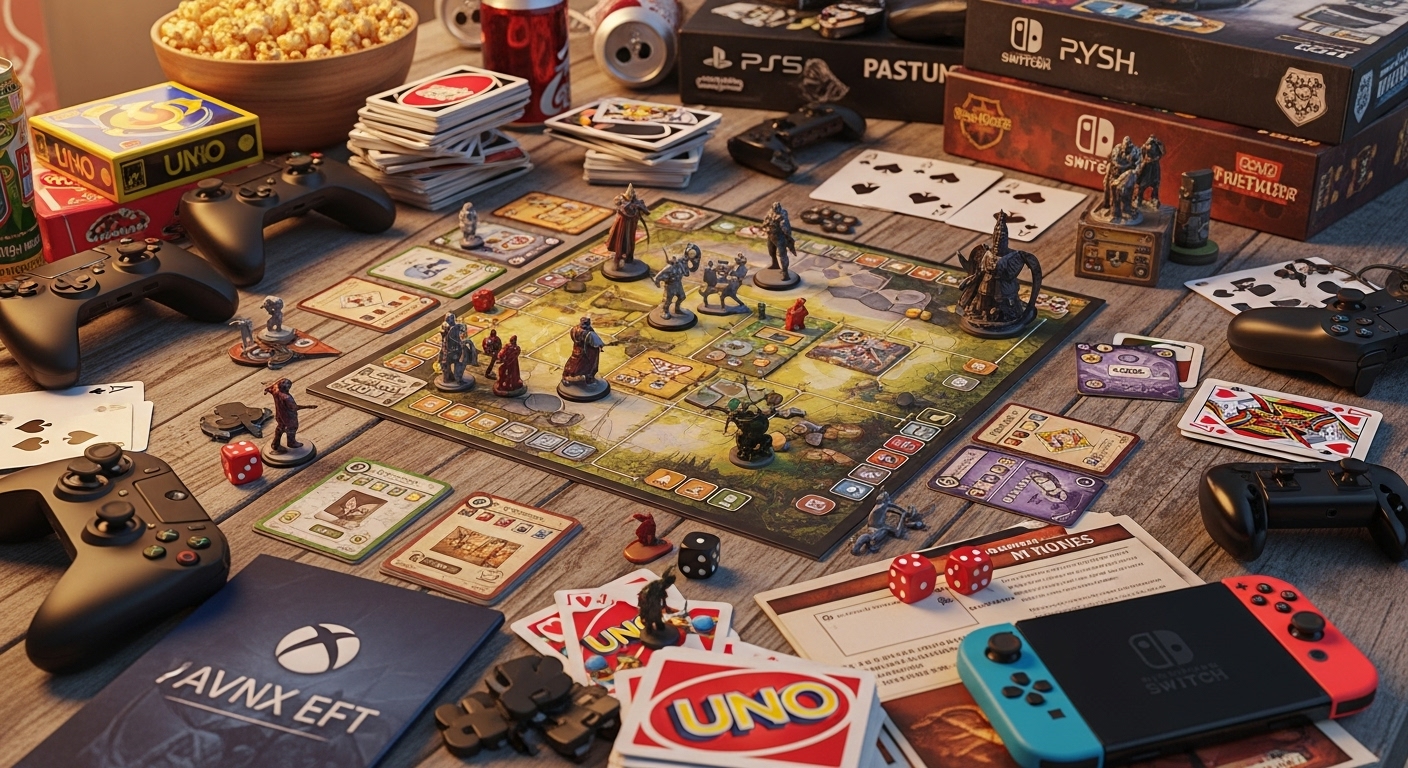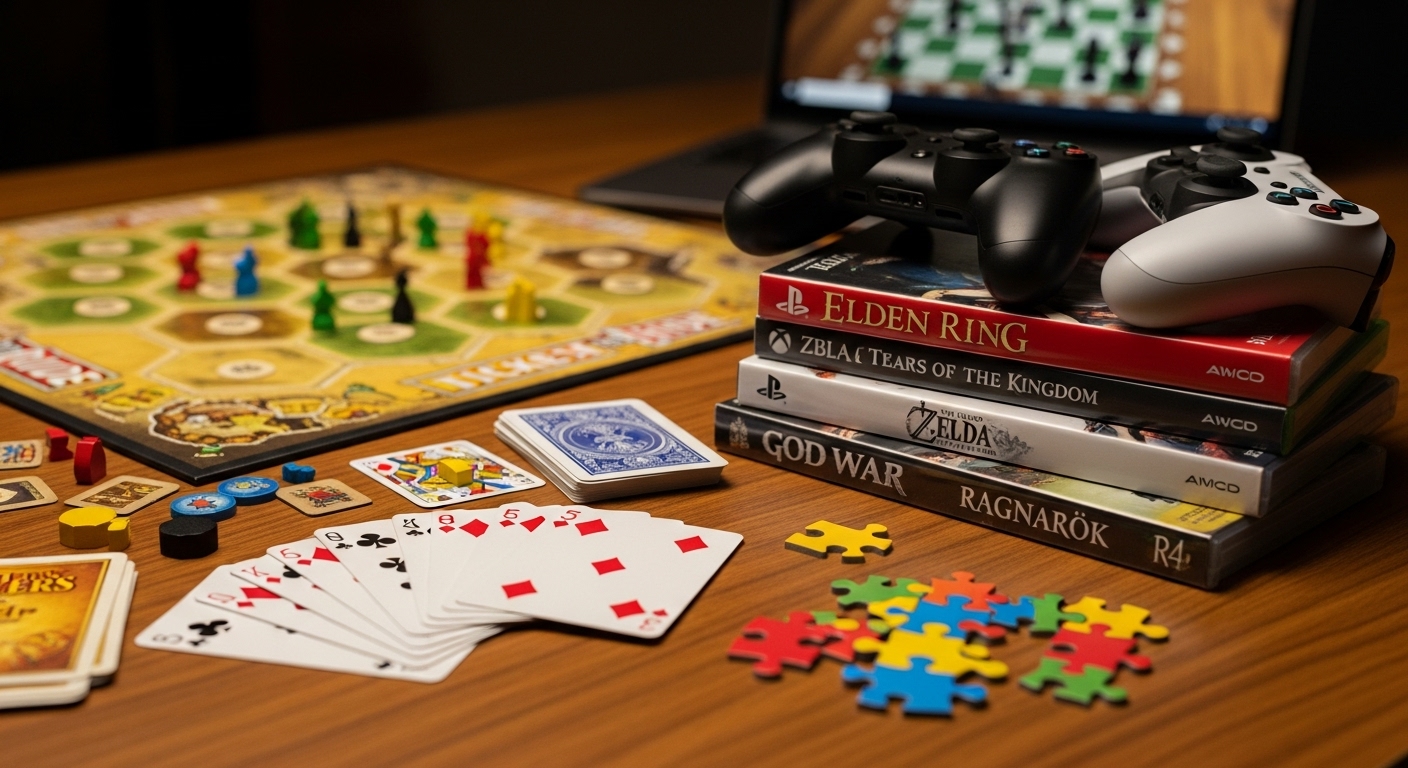

Games have been an intrinsic part of human history for millennia, evolving from simple pastimes to complex forms of entertainment and skill development. Whether they’re played for fun, competition, or social connection, games have had a profound influence on how we interact with the world and each other. From the first board games in ancient civilizations to the rise of immersive video games, the landscape of play has undergone an incredible transformation. In this blog post, we’ll explore the rich history of games, their cultural significance, the role of technology, and how modern gaming is shaping the future.
The Origins of Games: Ancient Beginnings
The concept of games can be traced back to the earliest human societies, where they were used not only for entertainment but also for social bonding, education, and ritual. Archaeological evidence shows that games have been a part of human life for thousands of years, with the oldest known board game being Senet, which dates back to around 3100 BCE in ancient Egypt. Senet was a game of strategy, and like many ancient games, it had symbolic connections to life and death, with players attempting to navigate the board in a way that mirrored the journey of the soul.
Similarly, the ancient Greeks and Romans had a rich tradition of games. The Greeks, for example, are credited with the origins of competitive sports, which evolved into the Olympic Games. The Romans, on the other hand, were known for their gladiatorial contests, which were brutal forms of entertainment that often involved combat between armed fighters in large arenas.
In addition to physical games, ancient cultures also enjoyed games of strategy and intellect. Chess, for instance, originated in India around the 6th century CE and spread to Persia, the Arab world, and eventually Europe. The game became a symbol of royal strategy and military tactics, and over time, it evolved into the version we know today.
The Rise of Board Games: From Strategy to Leisure
While physical games were central to many ancient cultures, the development of board games in the Middle Ages marked a shift toward indoor, intellectual entertainment. During this time, games such as chess, checkers, and backgammon became widespread in Europe and the Middle East. These games were not only enjoyable pastimes but also important tools for teaching strategic thinking, social interaction, and even diplomacy.
In the 19th and early 20th centuries, the advent of mass production allowed board games to become more affordable and accessible to the general public. Classic games like Monopoly, Scrabble, and Clue (known as Cluedo outside of the United States) became household staples, with families gathering around the table to engage in friendly competition. These games introduced elements of chance and strategy that added layers of complexity and excitement to the experience.
Board games have maintained their popularity over the years, with modern releases like Catan, Ticket to Ride, and Pandemic demonstrating the continuing appeal of physical games. In fact, the board game industry has experienced a resurgence in recent years, driven by new mechanics, deeper storytelling, and the rise of tabletop gaming communities.
The Digital Revolution: The Birth of Video Games
While board games remained a staple of home entertainment, the second half of the 20th century saw the birth of a new form of gaming—video games. The invention of the first electronic game systems revolutionized how games were played. In the early 1970s, companies like Atari and Magnavox introduced home consoles that allowed players to engage with video games on their television screens.
The 1970s also saw the rise of arcade games. Titles like Pong, Space Invaders, and Pac-Man became cultural phenomena, attracting millions of players to arcade halls across the world. These early video games were simple in design but offered a new kind of interactive experience that was unlike anything that had come before.
By the 1980s, the video game industry exploded. The release of the Nintendo Entertainment System (NES) in 1985 marked a turning point, bringing home console gaming into the mainstream. Games like Super Mario Bros., The Legend of Zelda, and Metroid became iconic and introduced players to new forms of storytelling, exploration, and gameplay mechanics.
As technology advanced, so did the complexity and depth of video games. The 1990s saw the advent of 3D graphics and more sophisticated game mechanics, which led to the creation of massive open-world games like Grand Theft Auto and The Elder Scrolls. Gaming consoles like the Sony PlayStation and Microsoft Xbox became household names, offering players not only gaming experiences but also media entertainment hubs with access to movies, music, and online multiplayer features.
The Rise of Online Gaming: Connecting Players Globally
The next major milestone in gaming came with the rise of online multiplayer experiences. The growth of the internet in the late 1990s and early 2000s opened up new possibilities for video games. Players no longer had to gather around a single screen to play together; they could now connect remotely and compete or cooperate with others from all over the world.
Online multiplayer games like EverQuest and World of Warcraft pioneered the massive multiplayer online role-playing game (MMORPG) genre, allowing thousands of players to interact in a single virtual world. These games introduced players to complex storylines, large-scale raids, and in-game economies, setting the stage for the social and competitive gaming experiences that would come later.
The introduction of online gaming was also a game-changer for the console market. Sony’s PlayStation 2 and later the Xbox allowed players to connect over the internet and engage in competitive online multiplayer. Titles like Halo 2, Call of Duty, and Fortnite brought millions of players together in fast-paced, team-based experiences.
Today, online gaming is an industry worth billions of dollars, with games like League of Legends, Fortnite, and PUBG dominating the global market. Esports, the competitive side of online gaming, has also become a major cultural and financial phenomenon, with professional players, teams, and tournaments attracting millions of viewers worldwide.
Mobile Gaming: The Democratization of Play
In recent years, mobile gaming has emerged as one of the most significant trends in the entertainment industry. The rise of smartphones, tablets, and app stores has made gaming more accessible than ever before. What was once the domain of dedicated gaming consoles and PCs is now available in the palm of your hand.
Mobile games like Angry Birds, Candy Crush, and Pokémon Go have reached audiences of all ages, transcending traditional gaming demographics and creating a new wave of casual gamers. The beauty of mobile gaming lies in its simplicity and accessibility—players can pick up and play games for a few minutes or hours, whether they’re at home, commuting, or waiting in line.
The mobile gaming market is incredibly diverse, with games spanning every genre imaginable, from puzzle games to action-packed shooters. Mobile gaming also introduced the concept of free-to-play models, where players can download games for free and choose to make in-game purchases for cosmetic items, upgrades, or power-ups. This shift has made gaming more financially accessible, allowing developers to reach broader audiences.
The Social and Cultural Impact of Games
Games have evolved from simple forms of entertainment to powerful cultural phenomena that influence social interaction, art, and even education. With the advent of multiplayer games and online communities, gaming has become a social activity, where players from different backgrounds can collaborate, compete, and form lasting friendships.
Games have also become a form of artistic expression, with developers using games to tell complex stories, explore moral dilemmas, and create immersive worlds. Titles like The Last of Us, Red Dead Redemption 2, and Journey showcase the potential of games as a medium for narrative storytelling, rivaling traditional forms of art like film and literature.
Moreover, games have found a place in education and skill development. Gamification, the integration of game elements into non-game contexts, is increasingly used in schools, workplaces, and training programs to engage students and employees. Games have been shown to enhance problem-solving, critical thinking, and teamwork skills, making them valuable tools for learning.
The Future of Gaming: Virtual Reality, AI, and Beyond
As technology continues to advance, the future of gaming looks more immersive and interactive than ever. Virtual reality (VR) and augmented reality (AR) are set to revolutionize the gaming experience by allowing players to step into fully realized digital worlds. VR headsets like the Oculus Rift and PlayStation VR are already giving players a taste of this future, with games that place them in the heart of the action.
Artificial intelligence (AI) is another area of development that will significantly impact the gaming industry. From improving the intelligence of non-playable characters (NPCs) to creating dynamic, responsive worlds, AI has the potential to make games more lifelike and engaging. Machine learning algorithms may also enable more personalized gaming experiences, where the game adapts to a player’s preferences and playstyle.
Cloud gaming, where games are streamed from remote servers rather than running on local hardware, is also on the rise. This could eliminate the need for expensive consoles or high-performance PCs, making high-quality games accessible to more people across various devices.
Conclusion
Games have come a long way from their humble beginnings as ancient pastimes. Today, they encompass a wide range of genres, platforms, and experiences, from casual mobile games to immersive VR worlds. Games have transcended their role as simple entertainment to become powerful tools for social connection, storytelling, education, and even cultural expression.
As technology continues to evolve, the future of gaming holds exciting possibilities. Whether through VR, AI, or cloud gaming, the next chapter in the story of play will likely be more interactive, inclusive, and immersive than ever before. What remains constant, however, is the universal appeal of games and the joy they bring to people around the world.