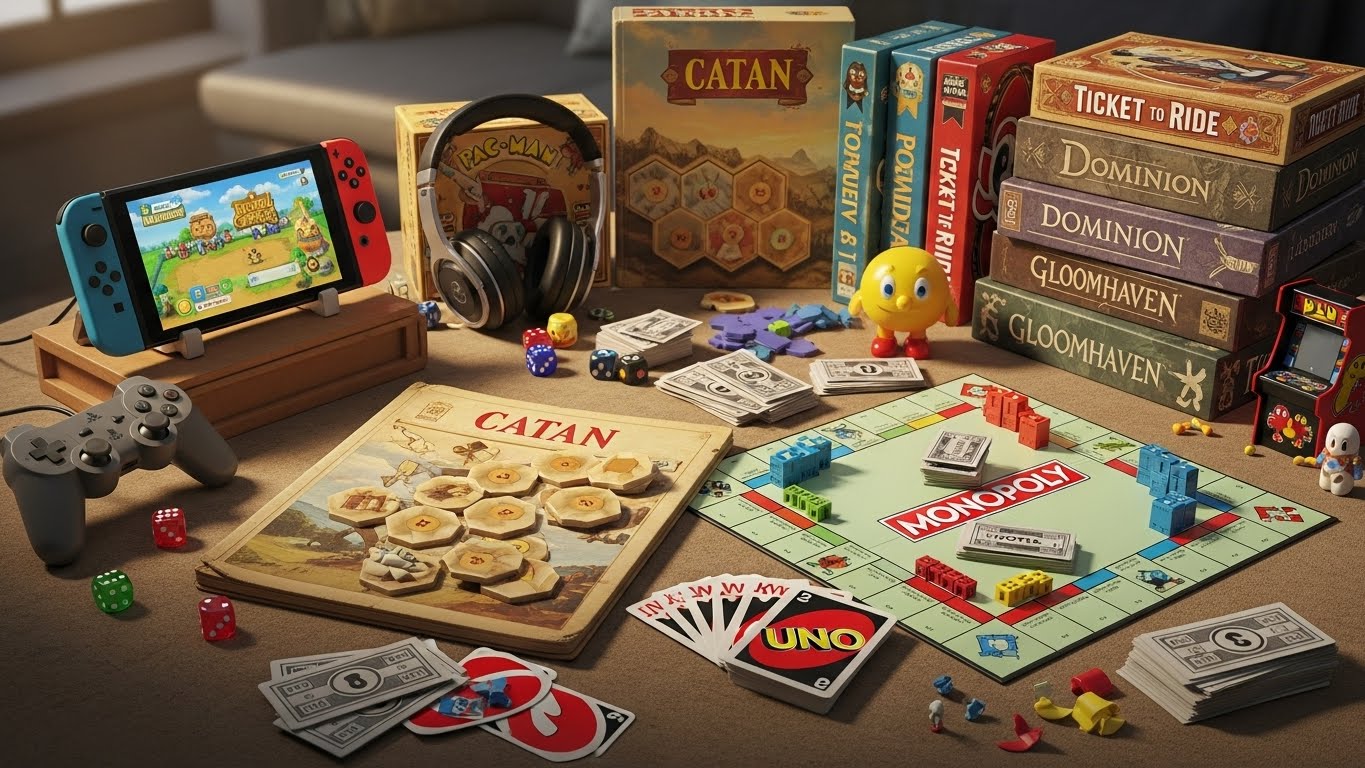

Gaming has come a long way since its inception. What was once a niche hobby enjoyed by a small group of enthusiasts has blossomed into a global phenomenon, captivating millions of players across the world. With advancements in technology, gaming has evolved from simple pixelated visuals to highly immersive experiences with breathtaking graphics, intricate storylines, and complex gameplay. In this blog, we will explore the evolution of gaming, its impact on culture, the rise of esports, and what the future holds for this dynamic industry.
The Early Days of Gaming: Simple Beginnings
To understand the present and future of gaming, it’s essential to take a trip back to where it all began. The first video games were created in the 1950s and 1960s but didn’t become commercially viable until the 1970s. Early games like Pong (1972) by Atari set the stage for the burgeoning industry. Pong was a simple arcade game where players controlled paddles on opposite sides of the screen to bounce a ball back and forth. The concept was basic, but the excitement it generated was groundbreaking for its time.
The late 1970s and early 1980s saw the rise of arcade gaming. Titles like Space Invaders (1978) and Pac-Man (1980) became cultural icons. These games featured simple mechanics but introduced a new form of entertainment that people could enjoy in public spaces, such as arcades, bars, and shopping malls. The arcade scene became a social hub, where players could compete for high scores and challenge their friends.
Home gaming consoles, like the Atari 2600 (released in 1977), also made their way into living rooms, allowing players to enjoy games at home instead of only at arcades. These consoles came with simple cartridges that allowed users to play different games on their TV. The early days of gaming, with their limited graphical capabilities, may seem primitive by today’s standards, but they laid the foundation for the digital entertainment landscape that we know today.
The Golden Age of Gaming: The 8-bit and 16-bit Eras
The 1980s and early 1990s marked what many consider the “Golden Age” of gaming. During this period, home consoles such as the Nintendo Entertainment System (NES) and Sega Genesis introduced more complex games with richer graphics and better sound. These consoles were able to handle more advanced graphics, allowing for smoother gameplay and greater immersion.
The NES, in particular, became a household name, with iconic games like Super Mario Bros. (1985), The Legend of Zelda (1986), and Metroid (1986) cementing their place in gaming history. These games introduced expansive worlds, iconic characters, and engaging storylines that captivated players of all ages. The 8-bit graphics of these games were charming, with characters like Mario and Link becoming cultural symbols.
The 16-bit era, with the release of the Super Nintendo Entertainment System (SNES) and the Sega Genesis, took gaming to a new level. This generation saw the rise of action-adventure and RPG games that offered deeper narratives and more intricate gameplay mechanics. Final Fantasy VI (1994) and The Legend of Zelda: A Link to the Past (1991) are prime examples of games that set new standards for storytelling and world-building in video games.
This era also marked the transition from arcade-style games to more elaborate home gaming experiences. Players no longer needed to visit arcades to experience high-quality games; they could do so from the comfort of their own homes. The growing popularity of consoles and games during this time helped solidify gaming as a mainstream form of entertainment.
The Rise of 3D Gaming: The 32-bit and 64-bit Eras
The mid-to-late 1990s marked another major leap in gaming technology: the transition from 2D to 3D graphics. With the advent of 32-bit consoles like the Sony PlayStation and the Sega Saturn, and the 64-bit Nintendo 64, gaming experienced a visual revolution. These consoles allowed for the creation of 3D worlds, which were groundbreaking at the time.
Super Mario 64 (1996) is often cited as one of the most important and influential games in the history of 3D gaming. Its free-roaming, open-world design was revolutionary, and the game set the standard for future platformers. The Legend of Zelda: Ocarina of Time (1998), widely considered one of the greatest video games of all time, brought 3D exploration, puzzle-solving, and action together in a seamless experience that captivated players for hours.
This era also saw the rise of franchises like Final Fantasy VII (1997), which was one of the first games to fully embrace the potential of 3D graphics in storytelling. The cinematic cutscenes, complex characters, and epic narrative set a new bar for RPGs and showed that video games could be more than just entertainment—they could be an art form.
The Online Revolution: Gaming Goes Social
The early 2000s marked the arrival of online gaming, which would forever change the way people played and interacted with games. The internet opened up new possibilities, allowing players to connect with each other across the globe. This era saw the rise of massively multiplayer online role-playing games (MMORPGs) like World of Warcraft (2004), where players could explore vast fantasy worlds, complete quests, and engage with thousands of other players in real time.
Online multiplayer games became a staple, with franchises like Halo (2001), Call of Duty (2003), and Counter-Strike (1999) introducing competitive online gameplay. Players could now team up with friends or compete against others in real-time, adding a new level of excitement and strategy to gaming. The ability to communicate and collaborate with others in-game transformed gaming into a social activity, making it more interactive and immersive than ever before.
The rise of platforms like Xbox Live and PlayStation Network made it easier than ever to connect with others and play games online. This era also saw the introduction of digital game distribution through services like Steam, which allowed players to download and play games directly on their PCs. Digital distribution further lowered the barriers to entry for both players and developers, enabling indie games to flourish and offering new opportunities for creativity.
The Impact of Esports: Gaming as a Spectator Sport
As gaming became more social, it also began to evolve into a competitive activity. The rise of esports (electronic sports) brought professional gaming to the forefront, creating a new avenue for talented players to earn recognition and monetary rewards. Esports tournaments, where professional teams compete in popular games like League of Legends, Dota 2, and Counter-Strike: Global Offensive, now draw millions of viewers worldwide.
Esports has grown into a multi-billion-dollar industry, with events held in massive arenas and broadcasted to audiences across the globe. Major companies like Blizzard, Riot Games, and Valve have invested heavily in esports, organizing tournaments with huge prize pools and global reach. The International, an annual Dota 2 tournament, is one of the largest esports events, with a prize pool exceeding $40 million in some years.
The rise of esports has also led to the professionalization of gaming, with players and teams now regarded as athletes. Sponsorships, team organizations, and professional coaching are all part of the esports ecosystem. Universities even offer scholarships for students pursuing competitive gaming careers, further solidifying gaming as a legitimate and respected pursuit.
The Future of Gaming: Virtual Reality and Beyond
The future of gaming holds immense potential, with emerging technologies like virtual reality (VR), augmented reality (AR), and artificial intelligence (AI) set to redefine the way we experience games. VR gaming, in particular, promises to provide an entirely new level of immersion. With devices like the Oculus Rift and HTC Vive, players can step into virtual worlds and interact with them in ways that were once only imagined in science fiction.
AR gaming, which blends digital content with the real world, is already gaining traction through games like Pokémon GO (2016), which allows players to catch virtual creatures in their real-world environment. As AR technology advances, we may see even more interactive experiences that allow players to engage with both the digital and physical worlds simultaneously.
AI is also poised to revolutionize gaming, both in terms of gameplay and content creation. AI could create dynamic, responsive narratives that change based on player choices, providing a more personalized and adaptive experience. Additionally, AI could be used to generate more complex, lifelike non-player characters (NPCs) that interact with players in meaningful ways.
The rise of cloud gaming could also reshape the future of gaming. With platforms like Google Stadia and Xbox Cloud Gaming, players can stream games directly to their devices without needing expensive hardware. This democratizes access to high-quality gaming, allowing anyone with an internet connection to enjoy the latest titles without the need for consoles or high-performance PCs.
Conclusion
Gaming has come a long way from its humble beginnings. What started as a simple pastime with basic graphics has transformed into an incredibly complex and immersive form of entertainment that has captured the imaginations of millions. With new technologies on the horizon, the future of gaming is filled with exciting possibilities. Whether it’s through virtual reality, esports, or cloud gaming, the way we play and experience games will continue to evolve, ensuring that the world of gaming remains as dynamic and thrilling as ever.